SAGE News
Is your institution meeting the Horizon Europe’s gender equity requirements?
 SAGE has published new resources to help institutions demonstrate how they meet Horizon Europe’s Gender Equality Plan requirements, a mandatory eligibility condition for the €95.5 billion research and innovation program.
They are among several new resources developed to help institutions understand how their SAGE Athena Swan pathway supports compliance across different reporting and legislative frameworks, and to make that alignment visible within their institutions.
Institutions face a growing range of gender equality obligations: WGEA target-setting, the National Higher Education Code to Prevent and Respond to Gender-based Violence, the Australian Public Service Gender Equality Strategy 2021-26, the Victorian Gender Equality Act 2020, and Horizon Europe’s Gender Equality Plan eligibility requirements. These obligations are not separate from institutions’ SAGE Athena Swan work. For institutions doing that work well, they are largely the same work.
Explore the resources to see how your institution can meet legislative, reporting and funding requirements.
Nationwide consultation on the new MRI and TAFE programs
 Over the past two months, SAGE ran a national consultation to get input on the draft program structure and delivery model for our new TAFE and MRI GEDI accreditation programs.
Our objective was to make sure each program will actually work for the institutions it’s built for. We ran roundtables in Melbourne, Sydney, Perth, Brisbane and Adelaide, two virtual sessions, and surveyed anyone unable to attend in person.
We heard from TAFE and MRI leaders, as well as the people who would be directly engaging with these programs: HR, GEDI, data and reporting, and governance practitioners across both sectors.
A few key points stood out. MRIs stressed the need for a program that reduces burden, builds capacity and offers clear value beyond compliance. TAFEs told us the program needs to reflect how they operate, who their learners are, and the local communities they support and shape, given how different each TAFE’s context can be. Both sectors had a strong appetite for something that consolidates existing GEDI effort, embeds it into the structures and systems of institutions, and drives meaningful and lasting change.
This input will directly shape what gets built next, as we move into the co-design and pilot phase in early 2027.
SAGE MRI Symposia bring the sector together to drive GEDI
 People from 22 MRIs, the Association of Australian Medical Research Institutes (AAMRI), and the Australian Academy of Health and Medical Sciences (AAHMS) came together for two in-person symposia to share learnings and practice on equity, diversity, and inclusion in medical research institutes.
Equity Diversity Inclusion (EDI) Enablers in MRIs: Governance, Resourcing and Capability was a one-day SAGE symposium run in Melbourne in June and Sydney in August and focused on what is needed to cultivate equitable, safe and inclusive workplaces for a high-performing and sustainable medical research sector.
Session topics included engaging leaders effectively, what doing EDI work well looks like, and case studies on what’s possible in EDI resourcing across different organisations.
Recordings will be made available to SAGE subscribers via the Webinar section of the SAGE website.
Strengthening sector dialogue on gender-based violence
 SAGE’s Preventing and Responding to Gender-based Violence Community of Practice recently welcomed Michele Clark, Assistant Secretary of the Higher Education Gender-based Violence Regulator (GBV Regulator) and Kylie Smith from the Australian Government Department of Education.
The session provided attendees with greater clarity on the regulator’s outcomes-focused and risk-based approach, including expectations for whole-of-organisation plans, continuous improvement, leadership accountability and institutional resourcing. Attendees also had the opportunity to raise practical implementation questions directly with Ms Clark, including about plan reviews, data collection, student inclusion, definitions of gender-based violence and consistency in regulatory assessments.
Importantly, the discussion strengthened the two-way relationship between the regulator and the sector, with Ms Clark welcoming ongoing feedback to inform future guidance and regulatory practice.
If you wish to find out more about our Communities of Practice and Networks, email Karina Jamieson at karina.jamieson@sciencegenderequity.org.au.
In focus: Three institutions achieve SAGE Athena Swan Silver
 The University of Sydney, Western Sydney University and RMIT University earned SAGE Silver Awards for their efforts in structural and policy change to advance gender equity, diversity and inclusion (GEDI) across their workforces.
The awards recognise demonstrated progress across several areas, including academic career progression, recruitment, flexible working arrangements, support for parents and carers, LGBTQIA+ inclusion, disability inclusion and cultural inclusion.
SAGE CEO Dr Janin Bredehoeft said a decade of work had led to “gender equity, diversity and inclusion moving from a project into a permanent feature of how a university runs.”
Among the highlights:
- RMIT University has achieved a 40:40:20 gender distribution among academic staff in its STEMM colleges and more than halved its STEMM pay gap, from 9% to 4.3%.
- At Western Sydney University, First Nations staff representation has grown to 3.4%, and the number of First Nations academics at Level D has increased from two to nine.
- The University of Sydney has made substantial progress in academic career progression: women now hold just over half of all academic positions, including 45.4% of Level D roles (up from 38.6% in 2017) and 36.1% of Level E roles (up from 31.1%).
To find out what these institutions did to drive systemic change, follow the links above or visit the SAGE website’s news section.
 Save the Date: Disability inclusion in higher education and research
Monday 19 October | 11.00am AEDT
Join us for an upcoming SAGE webinar exploring Disability Inclusion in Higher Education and Research, with a focus on creating more inclusive workplaces and organisational practices.
Learn more here.
 Next award submission dates
Are you planning to submit a SAGE Cygnet or Silver Award application? If you haven’t alerted us to an intention to submit a Cygnet, please reach out as soon as possible.
Last day of submissions:
- Cygnet submissions: 30 September, 2026
- Silver Award submissions: 31 October, 2026
FROM OUR INSTITUTIONS AND PARTNERS
 STEM Equity Monitor
The Department of Industry, Science and Resources has published the 2026 STEM Equity Monitor, which brings together national data on women and other under-represented groups in science, technology, engineering and mathematics (STEM).
The data set out the scale of the challenge:
- Women hold 16% of STEM roles, up from 11% a decade ago. At the current rate, a girl born today will retire before seeing gender equity in STEM occupations.
- Longitudinal data suggest most women STEM graduates either never enter STEM roles or leave within five years. Just 31% of women graduates are in STEM occupations five years after graduating, compared with 57% of men STEM graduates.
- 2% of STEM-qualified occupations are held by First Nations people, a 16% relative increase in representation over the five years to 2023.
- Concerningly, the number of people with disability in STEM occupations fell by 25% over the five years to 2023.
SAGE CEO Dr Janin Bredehoeft examines what the STEM Equity Monitor means for STEM workplaces and Australia’s projected skills needs in a recent blog post.
University of Melbourne launches new gender affirmation resource

The University of Melbourne has launched ’Return to Self’, a video and podcast series, to help us all feel more confident supporting trans colleagues and students.
Centring on the stories and insights of three trans people, ‘Return to Self’ unpacks what gender affirmation is and why it matters, offering practical guidance without judgement. Fae, Cam and Nora bring the concepts to life in tender and relatable ways.
The resource brings humanity, nuance, and clarity to the topic – so we can better support trans people in the workplace, the classroom, and our lives.
‘Return to Self’ works as a standalone self-paced resource for individuals, or as the foundation for optional in-person sessions tailored to the needs of specific teams.
At its heart, it encourages us all to create an environment where people can get on with the work and study they want to do, and the lives they deserve to live.
The series is available on the University of Melbourne’s website.
 Horizon Europe Roadshow comes to Australia
The Horizon Europe Roadshow Australia 2026 is visiting all Australian state and territory capitals this month, helping Australian researchers, research organisations, industry and SMEs prepare to participate in Horizon Europe from 1 January 2027.
Horizon Europe has strict gender equity eligibility requirements. To see how your institution can ensure it meets those requirements, download SAGE’s new Horizon Europe funding resources.
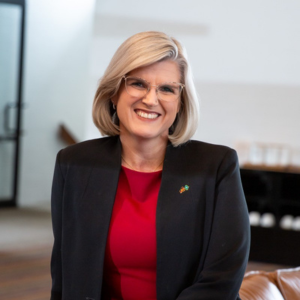 Griffith appoints Professor Jessica Vanderlelie as next Vice Chancellor
Late last week, Griffith University announced that Professor Jessica Vanderlelie would be its sixth and next Vice Chancellor and President, taking up the role in November.
On current count, women make up 12 of Australia’s 41 university leaders (29%), which is still well short of the 21 women needed to achieve parity
Professor Vanderlelie replaces Professor Carolyn Evans, who was at the helm from early 2019 until last month. She has been a strong advocate for gender equity, diversity and inclusion, and is the current Co-Chair of Universities Australia Women. We warmly congratulate her on her Griffith appointment.